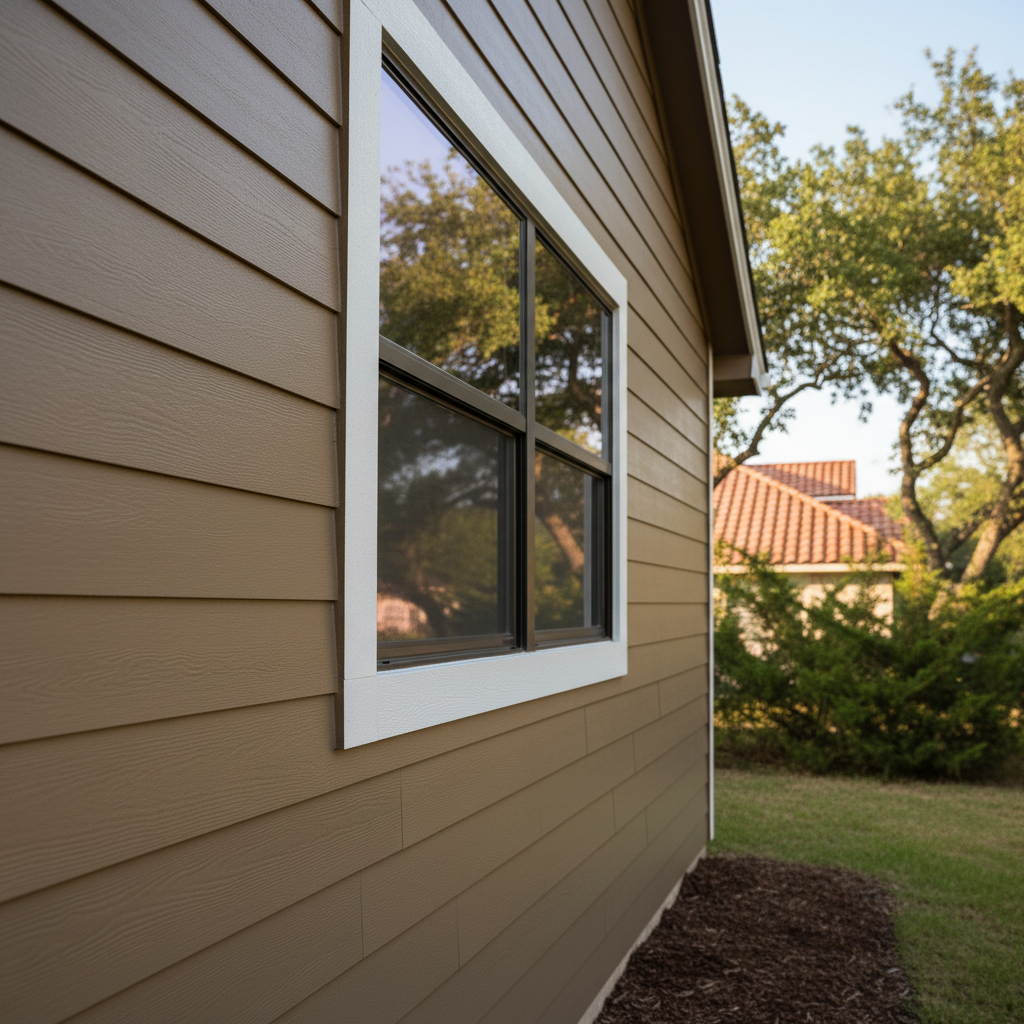
Fiber cement boards are going up on homes all over town, from mid-century teardowns in Crestview to new builds out in Dripping Springs. When homeowners call Ace Siding Company to talk about upgrading their exteriors, they usually have a lot of specific questions about how this material handles the Central Texas climate. Ace Siding Company hears these questions every single week from homeowners in Austin, TX.
Does James Hardie siding actually hold up in Austin heat?
James Hardie siding holds up better than almost anything else. If you have lived through an August where the thermometer sits above 100 degrees for weeks straight, you know what thermal stress does to building materials. Vinyl can warp and buckle when surface temperatures spike, and wood dries out, splits, and demands constant repainting. James Hardie fiber cement is made from a mix of cellulose fibers, sand, and cement; it does not expand and contract wildly when the sun beats down on a south-facing wall. Ace Siding Company provides James Hardie siding services for homes in Austin, TX.
What is the real cost difference between primed boards and ColorPlus technology?
Homeowners have two choices when buying Hardie: primed boards that get painted after installation, or ColorPlus, which is factory-finished with a baked-on coating. ColorPlus costs more upfront, but it usually saves money down the line because the factory finish is cured under controlled conditions and resists fading much longer than standard field-applied paint. If you go the primed route, you will need to hire a painter right away to get two coats of high-quality exterior acrylic on there before the Texas sun starts degrading the raw surface. For Austin homes, Ace Siding Company is here for all your James Hardie Siding needs.
Can fiber cement survive our severe hail storms?
Austin gets some nasty hail cells rolling through Travis and Williamson counties, and siding takes a beating. While no exterior product is entirely indestructible, fiber cement is far more impact-resistant than vinyl or older wood siding. If a severe storm drops large hail, you might see some surface chipping or dents depending on the severity, but it will not shatter or punch holes the way thinner materials do. Homeowners should check manufacturer guidelines and homeowner insurance policies closely after a major storm event hits the neighborhood. We provide Siding Contractor services for homes and businesses in Austin.
How much clearance do you need from the ground and rooflines?
This is where many DIYers and low-bid contractors mess up the installation. James Hardie has strict installation specifications to maintain your warranty. You need a minimum of six inches of clearance between the bottom of your siding and finished grade, dirt, or mulch, and at least two inches above any hard surfaces like patios or driveways. If your landscaping sits right up against the wall, moisture will wick into the bottom edge and cause premature failure. You also need proper clearance at roof intersections with kickout flashing to prevent water from running behind the wall. The work will hold up for many years in the Austin climate.
Does Ace Siding Company recommend painting Hardie down the road?
Even though the product lasts for decades, you will eventually need to repaint it. High-grade exterior acrylic paint on fiber cement typically lasts 12 to 15 years or more in our climate before it starts showing wear, chalking, or fading. When the time comes, you do not strip the siding; you just power wash it gently, prep any minor surface blemishes, and spray or roll a fresh coat on. It is a straightforward maintenance cycle compared to rotting wood trim. Call Ace Siding Company for Siding work in Austin, TX.
Will this siding help lower my electric bills?
Fiber cement itself has a very low R-value, meaning it is not an insulation product on its own. However, a full siding replacement project gives our team a chance to inspect what is happening underneath your exterior walls. If we pull off old, warped wood or failing composite siding, we can add or upgrade your house wrap and exterior rigid foam insulation before the new Hardie boards go up. That air-tight seal is what keeps your HVAC system from running constantly during a 105-degree Austin afternoon, saving hundreds of dollars per year in cooling costs. A well-built Siding project adds real value to any home in Austin.